Left side of the tank. To the left, the light-damaged anemones have re-covered very nicely, except from one specimen. That one is probably lost, since a number of flatworms is sitting on it, which can not be good. The green polyps have started to attach them-selves to the rock, and the visible cuts are healed. At the bottom of the image, the rock with striped disc anemones, already moved once, but still got too much light, is seen in it`s new location. It seems that the anemones thrive now, but their magnificent colours are not really displayed to their advantage. Just above the green polyps, is a newly acquired rock, which is really teeming with life in the form of little red tubeworms, disc anemones and a single artificially attached Euphyllia para ancora). The rock has also got a large unattractive lump of glue.

The right side of the tank. The Euphyllia divisa, has been moved just a smidgen, because it fell off the original place several times, but it seems to do very well in the intense light. To the right, You will recognize the rock with Xenia and the unknown stone coral (18/7 2009 tentatively identified as Pocillopora sp.), which also do OK on the original spot. The Caulerpa algae does not grow though. Below the Euphyllia, are situated a couple of different polyps, all new acquisitions, and the rock with anemones, that was acquired with the Euphyllia. It has been moved, to get some shade. The green coral to the right of the Euphyllia, is a Caulastrea sp. which apparently like the intense light. Other than that, various new disc anemones, under sharp observation, given the less than stellar results I have had, with placing them in too much light are tentatively placed here.


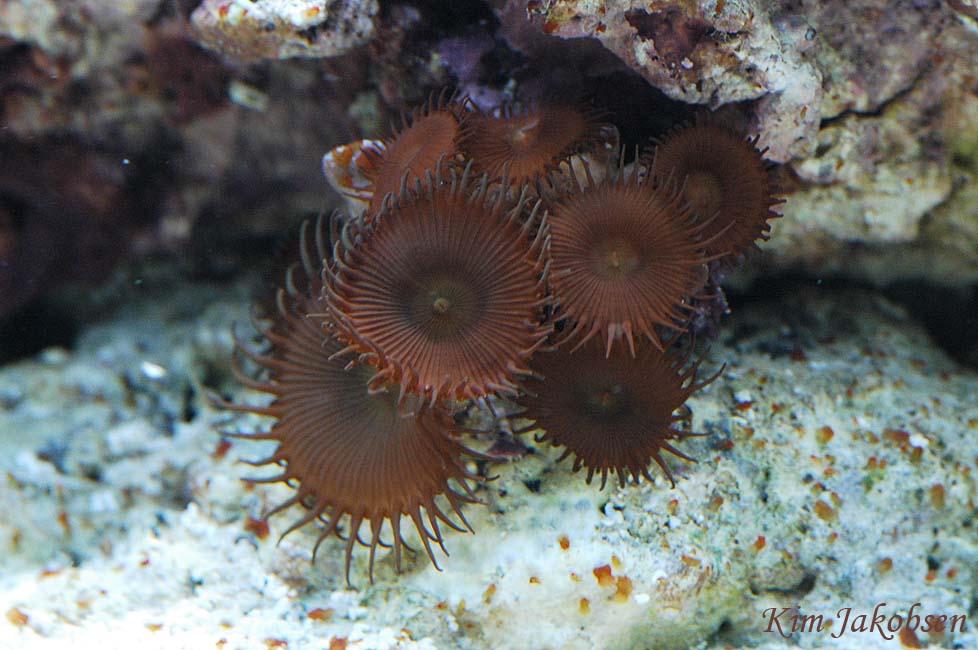
A small colony of zooanthids, probably of the genus Protopalythoa.
One of several hermit crabs (all this species) in the tank. They are very rarely seen.

Close up of the green polyps. Notice how the cuts have grown over compared to February.

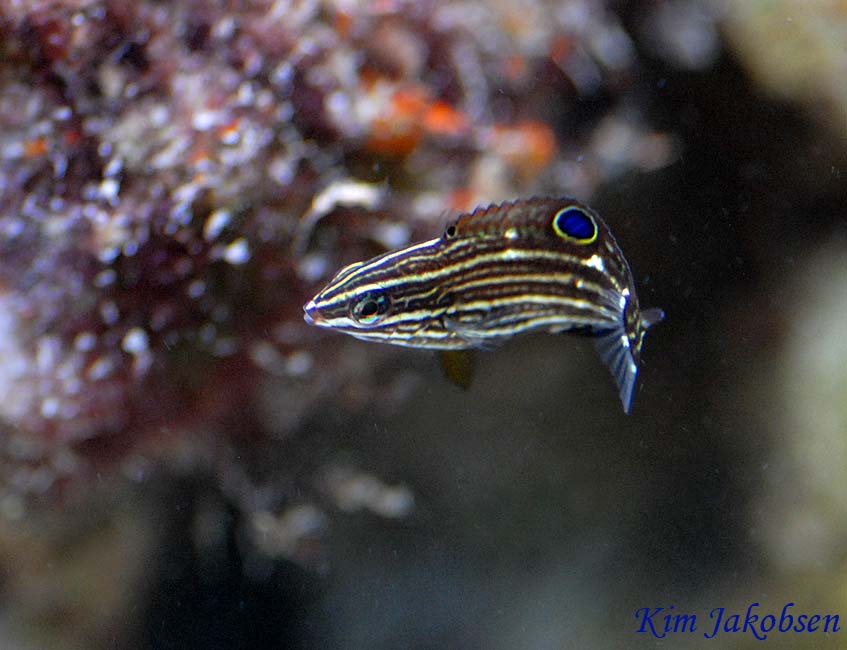
Halichoeres sp.. This fish was part of a larger deal, and thus a bit of a random acquisition, but it has quickly gained esteem, and is already a favorite of Mine. Very lively and not shy, even when I am messing around in the tank.
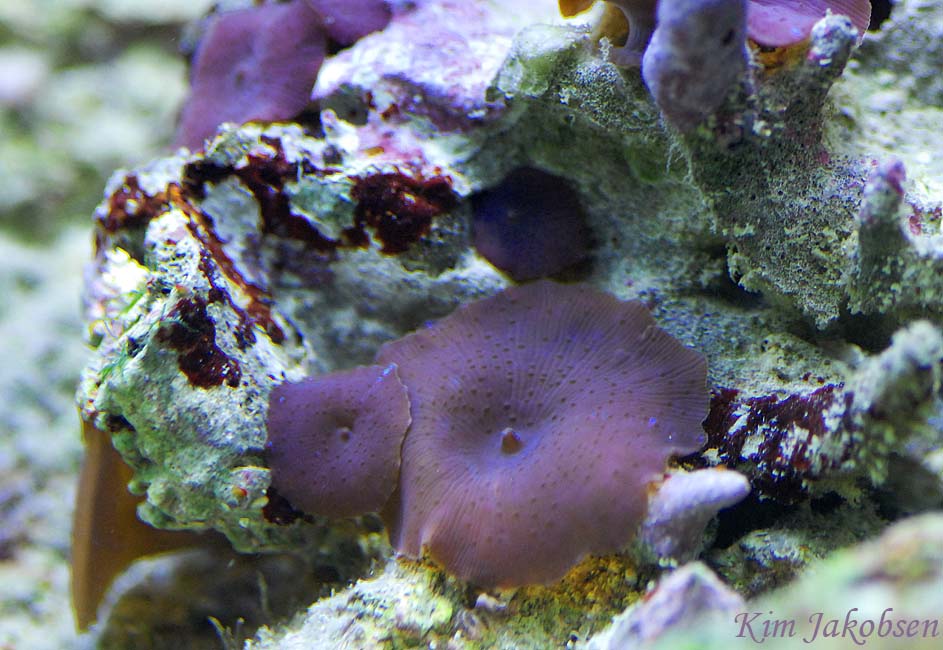
Disc anemones. They have tentatively been placed in direct sunlight, hoping that they have a better tolerance for this, than those tried before. Otherwise, they will have to be moved...

More disc anemones, which have also been placed in direct light.
Close up of the anemone colony, that has been moved away from the light. The red-brown spots on the rocks around them, are Planaria (flatworms), which unfortunately is becoming a nuisance, that I will have to do something about. A closer look at the anemones reveal, that they too are almost covered in planaria. It would appear that the planaria are attracted to damaged anemones. Whether or not this is harmful to the anemone, is not certain, but it is probably not good...

This column with anemones, that I had to move last month, seems to be OK now. Also here, the growing population of planaria, is visible, but does not affect these anemones.

Halichoeres sp. This image illustrates, that it is a small fish, no more than app. 1,5 inches long.

This Caulastraea sp. is positioned in very strong light, which it seems to agree very well with.

An unknown fish, peeking out from under the Euphyllia divisa coral.

