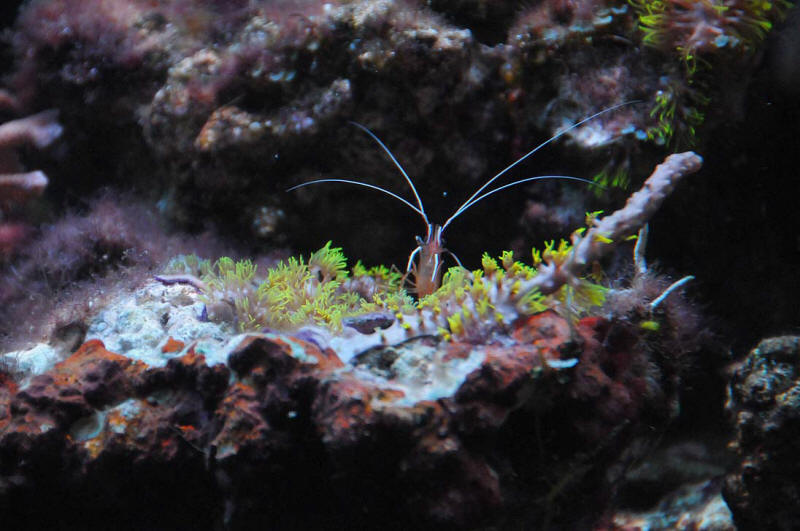
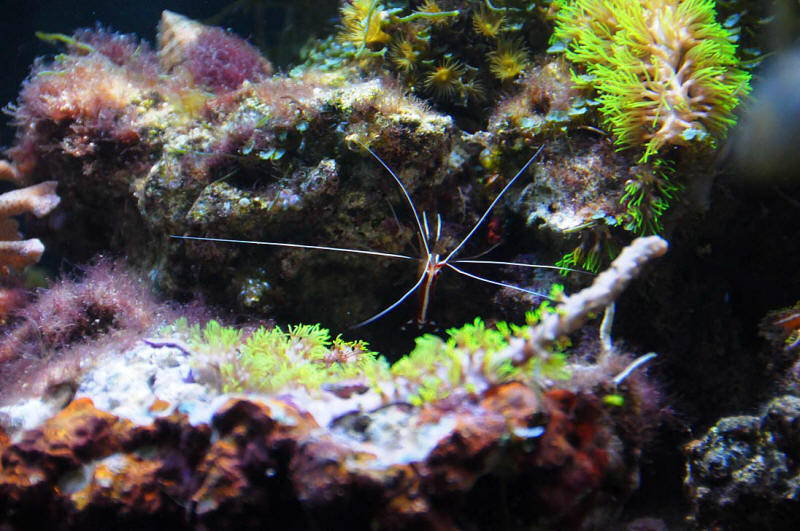
Lysmata amboinensis in typical postures. Usually 2-3 of them are visible at any given time, but they do not move around as much as I have seen in earlier encounters.
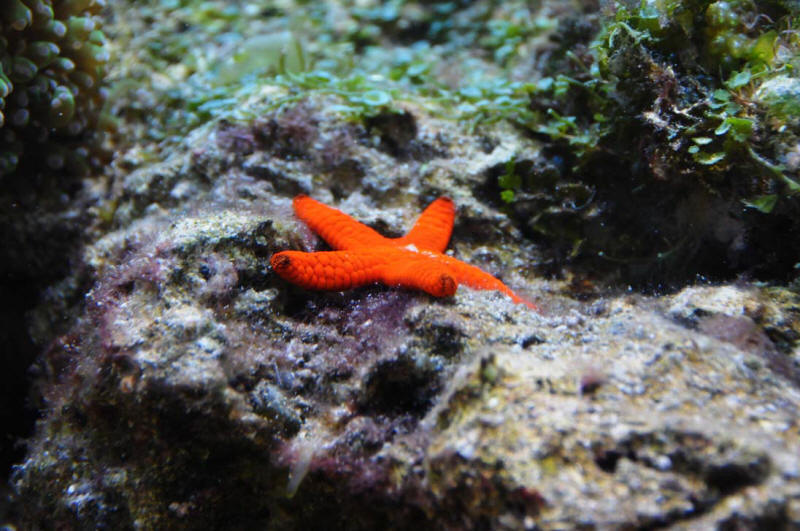
One of the two Fromia milleporella starfish currently residing in the tank. They seems to do OK, are very mobile and does not bother the sessile animals.
A new acquisition, that really have made an instant change to the tank; a Pomacanthus imperator. It actually does not really fit into this tank, since it grows too large and also have a tendency to pick at the sessile animals. But it is a rare find, to meet an individual that is only 4 inches long and already (almost) completely adult coloured, and there are plans for a larger tank, which will predominantly be a fish tank, so the temptation was too overwhelming...
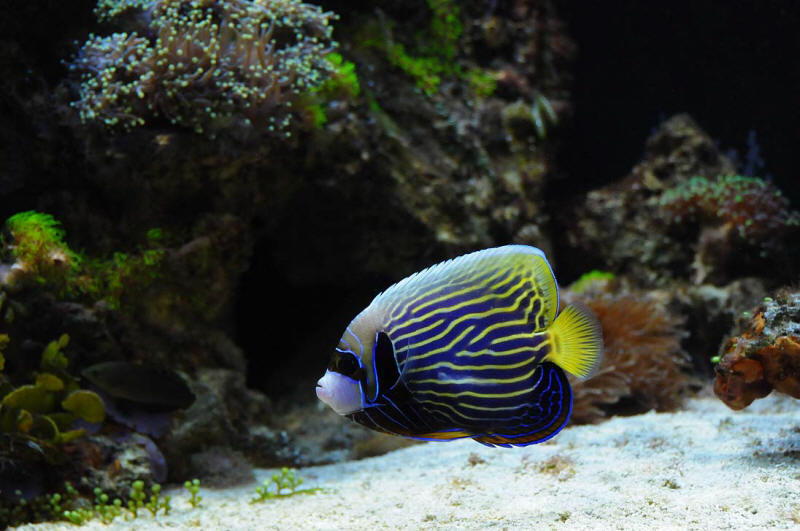
This image shows how relatively small (yet) the fish is. It is however, still larger than the rest of the fish population combined, with a corresponding appetite. It will be interesting to see how the system will react to the increased load.
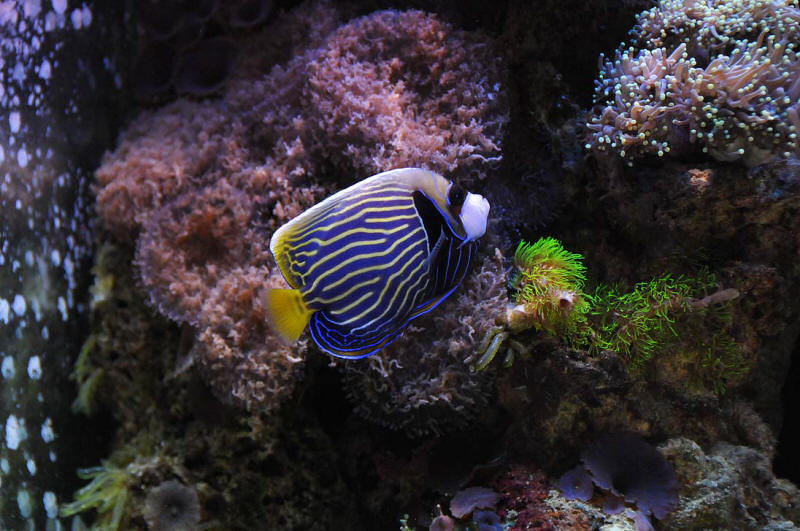
The fish is very trusting, and always close whenever somebody have a hand in the tank, investigating the possibility of a little snack.
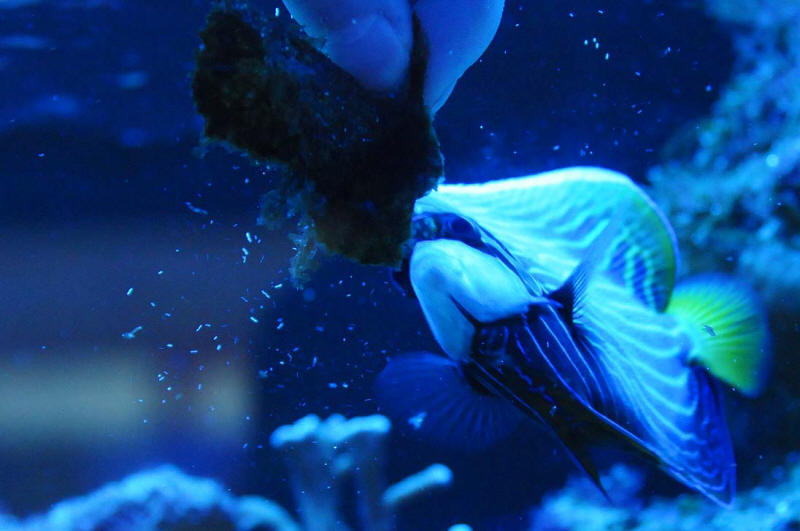
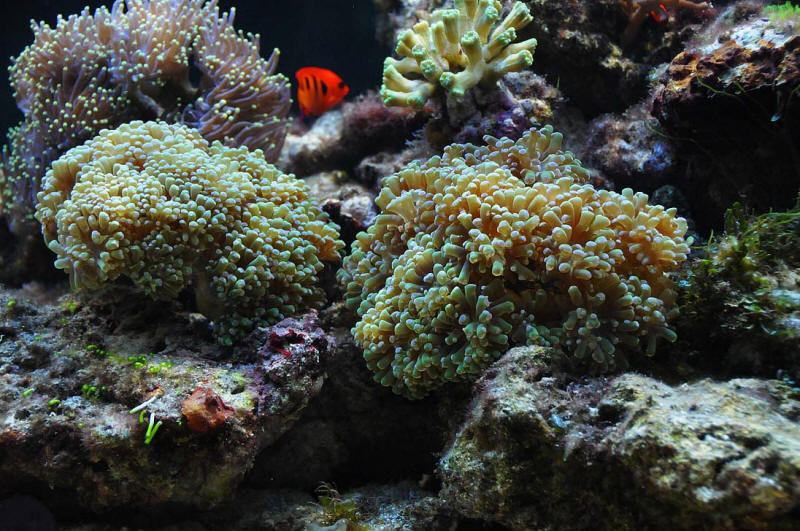
The large Euphyllia divisa coral, has by accident become two smaller ones! In an attempt to glue the coral to a rock (the increased size made i more and more unstable), the pressure I applied made it break in two, down through the middle. The two pieces do seem to grow happily though.
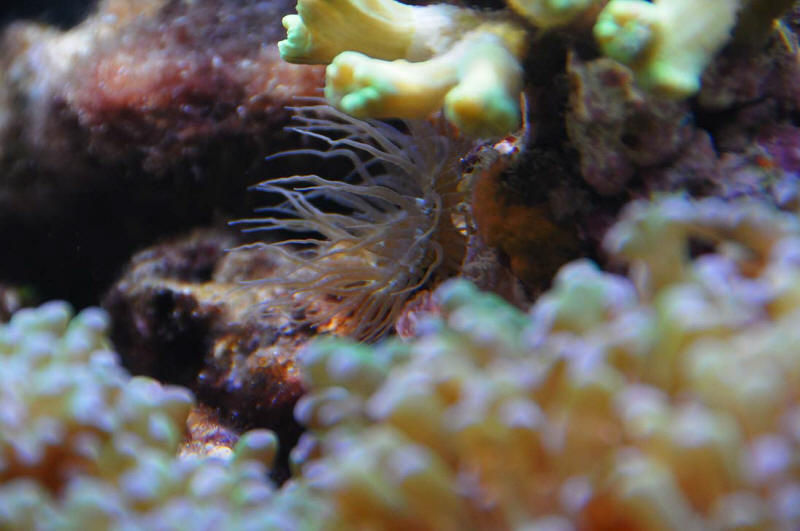
A classic "bad guy". This Aiptasia sp. have stubbornly resisted several attempts of extermination by boiling water, probably because it is residing in a deep hole, which is angled so that it is very difficult to get the stream of boiling water from the syringe directly onto it.
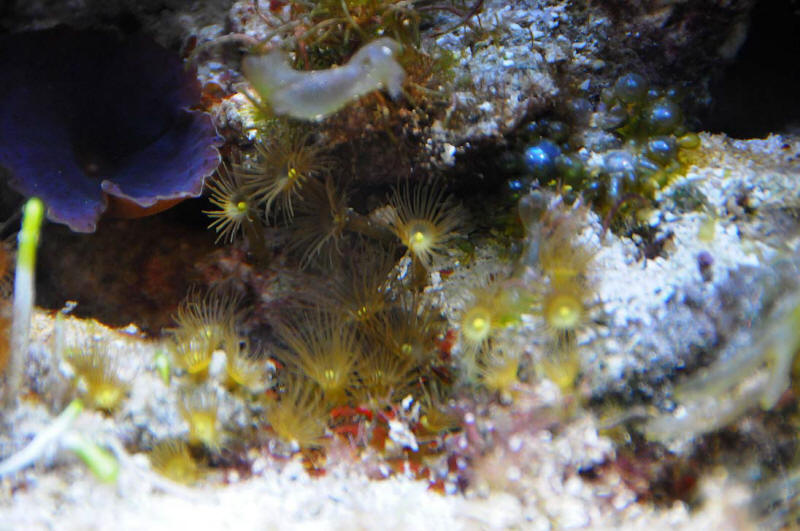
Mix, both good and bad, from the bottom where the live rock meets the substrate.
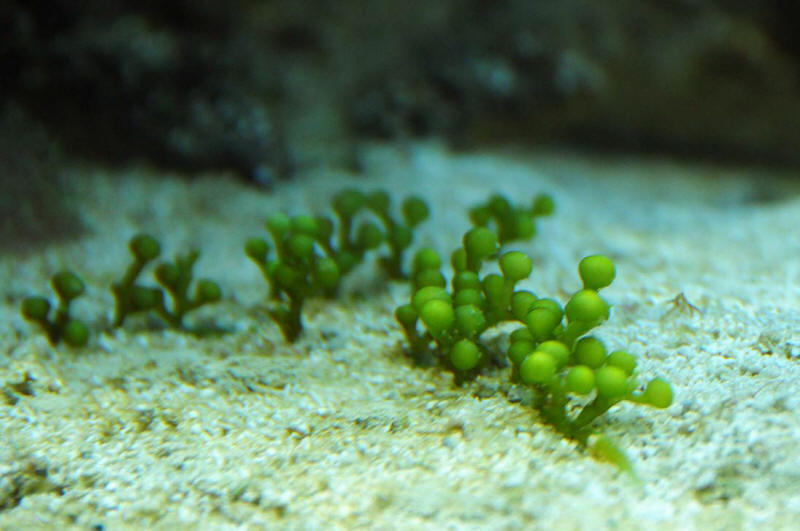
Good or bad? It really depends on the personal preferences of the owner. Here the spontaneous sprouting of Caulerpa racemosa, are, at least for now, welcomed. They do not grow very fast, are highly decorative, and very easy to control, if they get too voluminous.
The two "self planted" SPS corals (the only ones in the tank), which appeared very early, have for some reason stopped exposing their tentacles. I have been very relaxed with the addition of trace elements, and this is probably the first warning signs. Countermeasures are being put into action, as I am now starting to test the water regularly, and adding trace elements from a renowned dealer, combined with more potassium hydroxide (the tests clearly shows that KH is too low).